
The Curious Case of the Unstoppable Senior
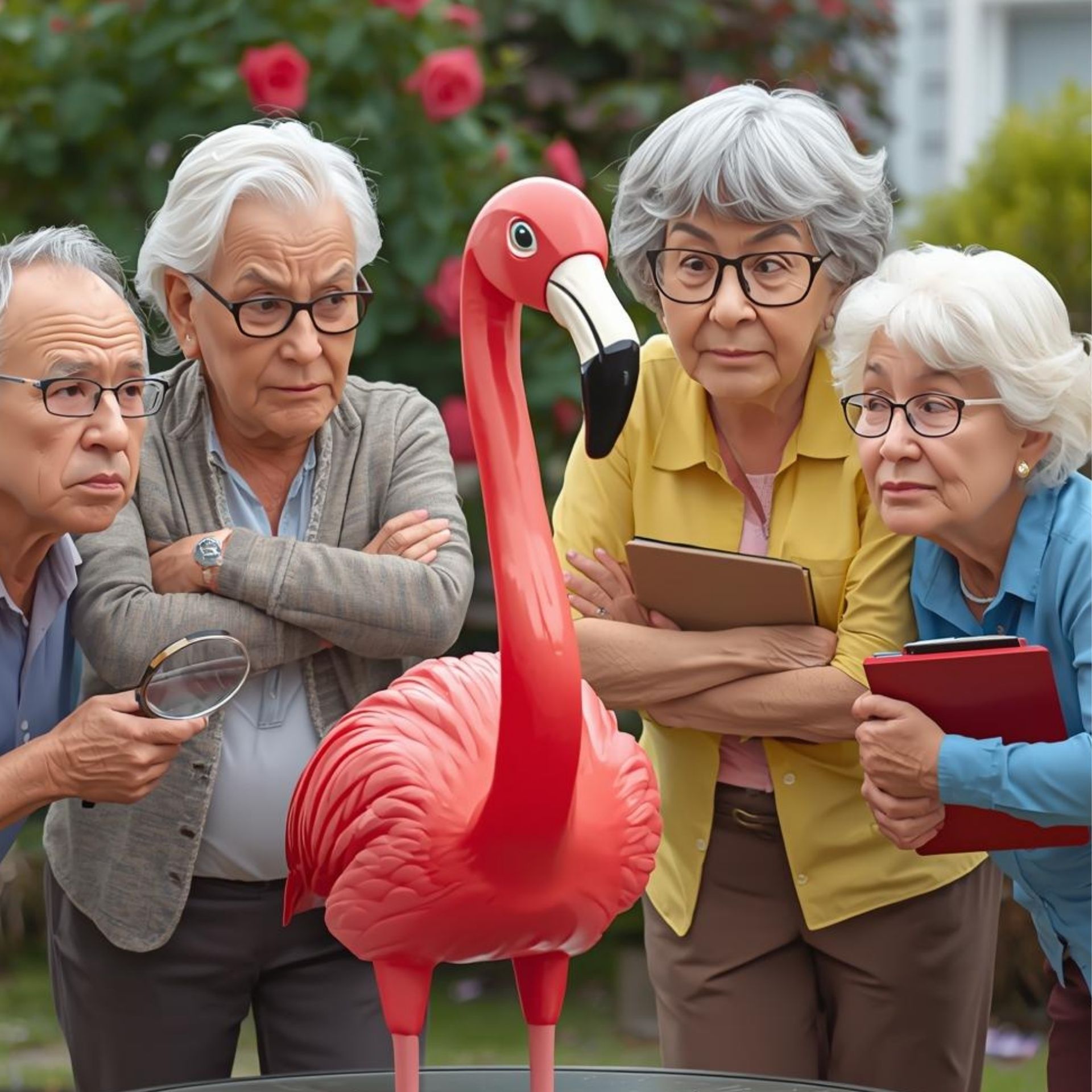
Wondermere Retirement Village billed itself as “active, vibrant and stimulating”, which technically covered bingo, aquarobics and an annual Elvis impersonator. Still.
Long time resident, Mabel Quinn, realised Wondermere had become boring on the day she caught three neighbours standing around a rose bush arguing about whether a wriggly thing was a weevil or a grub. Nobody googled it. Nobody even leaned in. They simply accepted it as “one of life’s mysteries,” then toddled off for sponge cake.
Mabel — 78, former librarian, lifelong nosey parker — refused to accept a future where intellectual stimulation came only in the form of Sudoku and the television weather report. So she declared a revolution.
She called it Operation: What’s That Then?
Its mission: resuscitate curiosity before everyone’s brain turned to mashed potato.
“I’ve been reading,” she told the residents, brandishing a clipboard like a weapon. “Curiosity releases dopamine. Dopamine improves memory. Novelty builds cognitive reserve. In other words, if we don’t start poking life with a stick, we’re going to forget why we walked into rooms forever.”
This got nearly everyone’s attention. Partly because Mabel looked like she might actually poke someone with the clipboard, but mostly because no one knew what dopamine was. (“Is it the stuff in those protein shakes?” George whispered.)
Mabel was the sort of person who could invent 100 new uses for a used sandwich bag, so it was no surprise when she devised an escalating series of curiosity drills — each one slightly bolder than the last, and all of them deeply suspicious to management.
The Flamingo of Destiny
Everyone in the Wondermere social circle drew a card from a box.
If yours showed a flamingo, you had to try something new that week — something mildly risky, mildly ridiculous, or mildly likely to get you mentioned in the village newsletter under “Incident Report.”
Dora signed up for an astronomy class after mistaking the café exhaust fan for a UFO. George, who hadn’t been curious since 1987, attempted pottery and created something that looked like a melted boot (but was very proud of it). Margaret tried pickleball and promptly launched her paddle into a shrubbery, which everyone agreed counted as “vigorous curiosity.”
Every time someone tried something new, Mabel clapped like a delighted seal.
“Neuroplasticity!” she shouted.
Residents assumed it was a Greek swear word until Mabel explained: “It means your brain can still rewire itself. Even at our age. Especially if you stop doing the same thing every day.”
The Question Tax
Next came The Question Tax: no one could make a statement without following it with a question.
“The kettle’s boiling… why is boiling called boiling?” “The soup is cold… is this an avant-garde culinary movement?” “That magpie stole my biscuit… should we respect the ingenuity?”
Annoying? Absolutely. Effective? Shockingly.
The village began buzzing with dopamine-fuelled thought spirals. Conversations grew longer, livelier and occasionally philosophical, often while standing in the queue for tea.
Even Dr Leo Brightman, the GP, reluctantly admitted everyone seemed sharper — and far harder to manage. “Curious people don’t just answer questions,” he noted. “They ask three more.”
Suspicious Object Saturdays
Mabel’s final tactic was Suspicious Object Saturdays, where someone (identity fiercely denied) planted a strange object around the grounds — a ceramic donkey holding a flute, a lone gold-painted baby shoe, a rubber chicken silently judging passers-by from a hedge.
Residents formed investigative committees. Who put it there? Why? What clues did they have?
Theories flew. Arguments flourished. Laughter boomed across the lawn.
And beneath the silliness, curiosity was quietly repairing neural pathways like a squad of tiny electricians. (Research consistently shows that novelty and curiosity trigger dopamine, boost motivation, and support memory formation — a trifecta for healthy ageing.)
The Miracle They Didn’t See Coming
Within weeks:
- People’s memories improved.
- Mood lifted.
- Everyone stayed up past 9 pm like renegades.
- Crossword difficulty levels increased.
- Bill developed an obsession with Wikipedia’s “Random Article” button and became the village’s foremost expert on sea cucumbers.
Dr Brightman finally wrote in his notes: “Curiosity = protective cognitive intervention (unexpectedly chaotic).”
Mabel’s Big Finish
Word got out.
A gerontology conference invited Mabel to present her findings.
Her talk — “Curiosity: Because Sudoku Alone Will Not Save Us” — received a standing ovation. The flamingo sat on the lectern like it had personally cured dementia.
The delegates begged for the Wondermere Method, which Mabel summarised simply:
- Ask “Why?” more.
- Try something new weekly.
- Chase small mysteries.
- Make mischief.
- Repeat.
Epilogue
Wondermere never returned to quiet predictability.
Every morning Mabel walked past Dora’s rose bushes, spotted another ambiguous wriggly creature, and smiled.
She no longer asked, “Is it a weevil or a grub?”
She asked, “What else could it be?”
Which, if you believe the science — and Mabel certainly does — is how you keep a brain young long after the rest of you is creaky.